

Quick Answer: A hydraulic jack should generally be stored with its piston rod fully retracted, unless this position is not permitted by the equipment manufacturer or conflicts with the design of the hatch-cover hydraulic system. Keeping the rod retracted protects it from moisture, salt, dust, impact, and corrosion. Parker’s guidance on storing hydraulic cylinders recommends protecting exposed machined surfaces and, for many designs, storing the cylinder in a position that keeps the rod and seals appropriately protected.
However, for hatch cover hydraulic jacks, storage should not simply be reduced to “always retract the cylinder”. This is because marine hatch-cover systems operate in a corrosive environment and may use cylinders as part of folding, side-rolling, lifting, or cleating mechanisms. Therefore, the correct storage condition depends on whether the jack is installed on the hatch cover, removed for storage as a spare, or being taken out of service for an extended period. Industry guidance from the Standard Club and IMO emphasises maintaining hydraulic components according to the manufacturer’s instructions, controlling corrosion and leakage, and securing hatch covers against unintended movement.
Why Should a Hydraulic Jack Usually Be Stored Closed?
The main reason for storing a hydraulic jack in the fully retracted position is to protect the piston rod. This is one of the most exposed and precision-finished surfaces on a hydraulic cylinder, and any corrosion, pitting, scoring, or mechanical damage can affect the rod seal, eventually causing hydraulic fluid to leak.
When a piston rod is left extended for long periods of time, more of its surface is exposed to the surrounding environment. This is particularly significant on ships, where hatch-cover hydraulic equipment may be exposed to seawater spray, humid air, rain, cargo dust, salt deposits and temperature fluctuations. Parker’s guidance on storing cylinders recommends protecting exposed surfaces against oxidation and specifically emphasises protecting cylinders from moisture, contamination and physical damage during storage.
Retraction also reduces the amount of polished rod surface that can be accidentally struck by tools, cargo-handling equipment, or other objects. While a small dent or scratch may appear insignificant when the cylinder is idle, once the cylinder is in operation, the damaged area passes through the rod seal and can cut or abrade the sealing element.
For this reason, the closed position is usually the best place to start when storing a detached hydraulic jack long term, unless the manufacturer’s manual specifies otherwise. It is important to note that storage recommendations can vary according to cylinder construction, seal design, mounting arrangement, and hydraulic circuit.
What Is the Difference Between Storing a Hydraulic Jack and a Hatch Cover Hydraulic Jack?
A conventional workshop hydraulic cylinder and a Hatch Cover Hydraulic Jack may use the same basic hydraulic principle, but their operating environments are substantially different. A hatch-cover jack is part of a larger marine mechanism that may have to move heavy steel hatch panels while exposed to vibration, seawater, corrosion, changing temperatures and considerable mechanical loads.
On merchant ships, hydraulic cylinders can operate folding hatch covers directly through end hinges, while other hatch-cover designs use hydraulic equipment in combination with pumps, motors, valves, cleating mechanisms and other components. The Standard Club’s hatch-cover maintenance guide notes that hydraulic systems are widely used because of the large loads involved and emphasizes inspection and maintenance of cylinders, control valves, motors and pump units.
This means that “closed” has two meanings that should not be confused. For a loose spare cylinder stored in a workshop, closed normally means the piston rod is retracted into the cylinder body. For a hydraulic jack installed on a vessel’s hatch cover, the appropriate position may be determined by the hatch-cover manufacturer’s operating procedure and the mechanical position of the cover.
The hatch itself must also be secured independently. A hydraulic cylinder should not be regarded as a substitute for a mechanical hatch-cover securing device when the vessel is at sea. IMO guidance emphasizes the importance of maintaining securing arrangements and preventing excessive hatch-cover movement under sea loads.
Why Is an Extended Piston Rod Vulnerable During Storage?
The piston rod is usually manufactured with a highly controlled surface finish, as it repeatedly moves through the rod seal. On marine hydraulic cylinders, the rod surface may also be chrome-plated or undergo another corrosion-resistant treatment. If this surface develops rust pits or deep scratches, it can compromise the cylinder’s sealing performance even after it is returned to service.
One way to visualise this problem is to consider the rod seal as a precision wiping interface. During operation, the seal removes contaminants from the rod as it enters the cylinder and helps to retain hydraulic fluid inside the cylinder. A rough or damaged rod can wear out the seal much faster than a clean, smooth one.
Parker specifically warns that oxidation can occur on exposed machined surfaces during storage, recommending the application of an appropriate protective film where required. Its storage guidance also emphasises protecting cylinders from physical damage and keeping ports closed against moisture and dirt.
This is particularly important for hatch cover hydraulic jacks because a ship’s environment is rarely dry or clean. Salt deposits can remain on exposed metal surfaces even when there is no visible seawater present. Humidity can also condense on cooler steel surfaces when temperature changes occur, for example between day and night, or when a vessel moves between climatic regions.
Therefore, retracting the piston rod is useful, but should be considered as part of a wider corrosion protection strategy rather than a complete storage procedure.
What Is the Recommended Storage Position for a Hydraulic Jack?
For a detached hydraulic cylinder that will remain unused for an extended period, the general principle is to retract the piston rod and store the cylinder in a clean, dry, protected environment. Parker’s published storage instructions recommend an indoor area with a dry, clean, and noncorrosive atmosphere and, depending on cylinder design, specify suitable vertical storage arrangements to reduce corrosion and seal damage.
However, the exact orientation matters. Different cylinder manufacturers provide different recommendations because the internal seal arrangement, port configuration, and cylinder construction can change how fluid and seals behave during storage. One Parker cylinder catalog, for example, gives a specific recommendation for certain cylinders to be stored vertically with the rod end down, while another Parker maintenance document recommends a different orientation for particular cylinder configurations.
This is an important point for procurement and maintenance teams: there is no universal storage orientation that should override the original manufacturer’s manual. “Store closed” is a useful general principle for protecting the rod, but the cylinder’s storage orientation, port protection, hydraulic-fluid condition, and corrosion inhibitor should follow the actual design documentation.
For a spare Hatch Cover Hydraulic Jack, the following sequence is generally appropriate:
- Clean the cylinder thoroughly.
- Inspect the rod for scratches, pitting, and corrosion.
- Retract the piston rod where the manufacturer’s instructions permit.
- Protect exposed machined surfaces with the specified corrosion inhibitor.
- Seal hydraulic ports with suitable clean protective plugs.
- Store the cylinder in a dry, protected location.
- Prevent direct contact with standing water or contaminated surfaces.
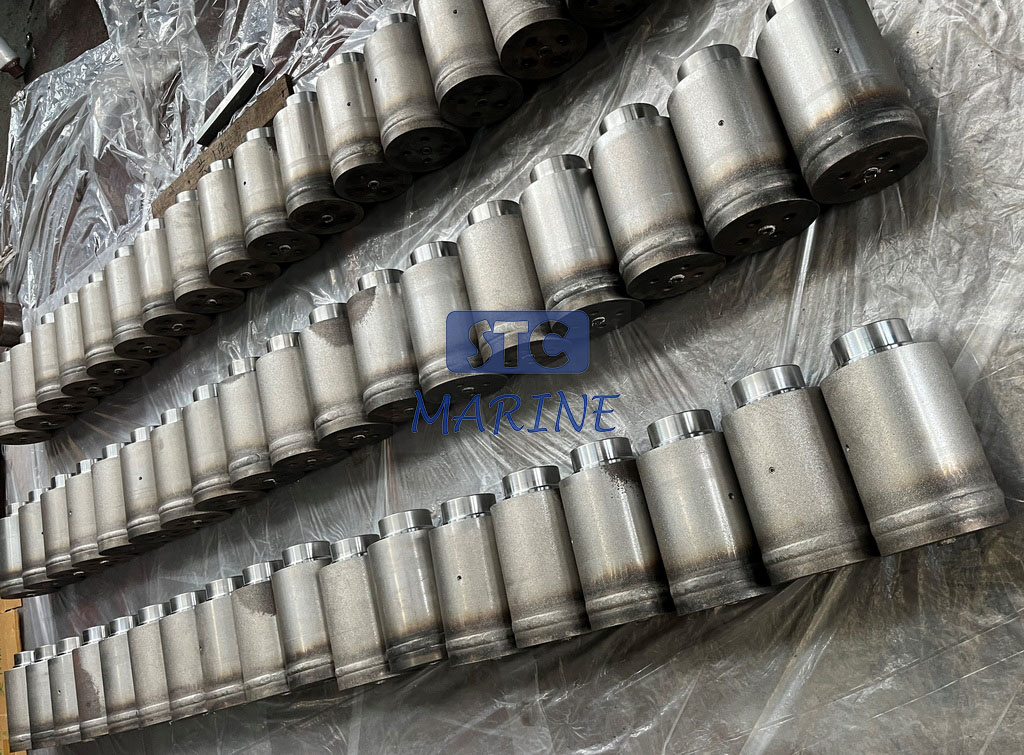
- Support the cylinder so that it cannot roll, fall, or suffer impact damage.
- Follow the manufacturer’s instructions for periodic inspection and movement.
| Storage condition | Recommended practice | Main reason |
| Piston rod | Fully retracted where permitted | Reduces exposure to corrosion and impact |
| Hydraulic ports | Fit clean protective plugs/caps | Prevents moisture and contamination from entering |
| Storage environment | Dry, clean, and protected | Reduces internal and external corrosion |
| Exposed machined surfaces | Apply approved corrosion protection | Prevents oxidation during long idle periods |
| Cylinder body | Protect from impact | Prevents dents and damage to seals or barrel |
| Storage orientation | Follow manufacturer’s specification | Seal and fluid behavior varies by design |
| Installed hatch-cover cylinder | Follow vessel/OEM procedure | Mechanical arrangement may determine safe position |
| Long-term storage | Inspect periodically | Detects corrosion, leakage, or seal deterioration |
Should a Hatch Cover Hydraulic Jack Be Stored Open or Closed on a Ship?
The answer requires more care when discussing a jack that remains installed on a ship. The hatch cover should normally be closed and secured when the vessel is at sea, unless an approved procedure for a specific operational situation requires otherwise. In this case, the position of the hydraulic cylinder should follow the design of the hatch cover manufacturer rather than an arbitrary rule about extending or retracting the rod.
The Standard Club’s hatch cover maintenance guidance emphasises that hatch covers must be properly maintained, and that hydraulic systems (including cylinders, pumps, valves, and associated components) should be inspected. It also warns that hatch covers are exposed to significant loads and acceleration at sea, and that restraints or stoppers are necessary to limit movement.
In other words, the hatch cover should not depend solely on hydraulic pressure to remain secure. Mechanical securing devices, cleats, stoppers, and other arrangements play an important role in resisting movement and maintaining the cover’s intended condition.
This distinction is important because a hydraulic cylinder can gradually lose pressure due to internal or valve leakage, or due to temperature-related effects. If the cylinder is relied upon as the sole restraint, a failure elsewhere in the hydraulic circuit could result in unwanted movement.
IMO guidance similarly emphasises the importance of maintaining hydraulic or mechanically powered opening, closing, securing and cleating systems, as well as ensuring the correct adjustment and maintenance of hatch-cover securing devices.

How Should Hatch Cover Hydraulic Jacks Be Prepared for Long-Term Storage?
Long-term storage requires more than moving the piston rod inward. The cylinder should first be cleaned and inspected, because salt, dirt, cargo dust, and hydraulic-oil residue can conceal corrosion or seal problems.
The piston rod deserves particular attention. Look for rust spots, pitting, chrome damage, longitudinal scratches, dents, or abnormal wear. If corrosion has already produced pitting, simply applying grease and putting the cylinder into storage may not solve the problem; the damaged surface may need professional inspection before the jack is returned to service.
Hydraulic ports should also be protected. Parker recommends keeping port protector plugs installed until installation and emphasizes the importance of preventing moisture and dirt from entering the cylinder.
The hydraulic-fluid condition is another consideration. If the cylinder is removed from a functioning system, the maintenance team should follow the equipment manufacturer’s procedure for draining, filling, or preserving the cylinder. A cylinder should not be opened simply for storage unless there is a specific maintenance reason to do so, because unnecessary opening introduces opportunities for contamination.
For vessels, the surrounding hydraulic system should also be considered. The Standard Club recommends regular inspection of hydraulic systems for leakage and notes that hydraulic oil and filters should be maintained according to defined intervals and significant repair events.
What Happens If a Hydraulic Jack Is Stored With the Rod Extended?
The most obvious risk is corrosion or mechanical damage to the exposed piston rod. If corrosion develops in the area passing through the rod seal, the seal may deteriorate more quickly once the cylinder is in operation.
A second problem is contamination. An exposed rod can collect dust, salt, moisture, and other contaminants. When the cylinder is subsequently retracted, these contaminants may be carried towards the rod seal and gland area.
A third concern is accidental mechanical damage. On a ship, for example, equipment may be moved around a storage area, cargo operations may take place nearby, or maintenance tools may come into contact with the exposed rod. Even a small impact can create a surface defect.
Parker’s storage guidance explicitly recommends protecting cylinders from physical damage, noting that even relatively minor damage to the cylinder or rod can cause problems during later operation.
However, there is an important exception: if the manufacturer’s storage procedure specifies a partially extended rod or another orientation for a particular cylinder, this instruction must be followed. Ultimately, storage engineering is determined by cylinder design rather than by a universal open-versus-closed rule.
How Does Marine Corrosion Affect Hatch Cover Hydraulic Jacks?
Marine corrosion is one of the most important storage considerations because hatch-cover hydraulic equipment operates in an environment where water and salt are persistent threats. Corrosion can affect the piston rod, barrel, mounting brackets, pins, bearings, fittings, and hydraulic connections.
The problem is not limited to visible rust. Salt contamination can remain on a surface and attract moisture, creating an aggressive environment even after the visible water has disappeared. Corrosion around mounting points can also affect alignment and increase loads on cylinder pins and bearings.
The Standard Club recommends routine examination of hatch covers, coamings and related components for corrosion, cracks, distortion and other deterioration, while IMO guidance stresses preservation of exposed surfaces and proper maintenance of hydraulically powered hatch-cover systems.
For this reason, a good preservation strategy combines retraction, cleaning, corrosion protection, port sealing, environmental control and periodic inspection. No single measure can compensate for neglect of the others.
How Often Should a Stored Hatch Cover Hydraulic Jack Be Inspected?
The frequency of inspections depends on whether the jack is installed and operational, stored as a spare, or preserved for long-term service. The manufacturer’s maintenance manual should always be consulted, particularly if it provides specific inspection intervals.
For installed hatch-cover cylinders, periodic examinations should cover the cylinder body, piston rod, seals, bearings, pins, mounting points, and signs of hydraulic leakage. For example, a MacGregor hatch-cover maintenance manual specifies periodic inspection of the cylinder condition, bearings, pins, and oil leakage. This illustrates that cylinder maintenance forms part of the wider hatch-cover maintenance programme, rather than being treated as an isolated component.
For a spare cylinder kept ashore or in a shipboard store, the focus of the inspection should be on the preservation condition. Check for corrosion, damaged protective coatings, leaking seals, deteriorated port plugs, moisture ingress, and physical damage. If the cylinder has been stored horizontally, check the storage instructions because some manufacturers recommend periodically changing its position to reduce seal deterioration. Parker provides such guidance for certain cylinder configurations.
Before returning a stored jack to service, do not simply connect the hydraulic hoses and apply full operating pressure immediately. Instead, inspect the cylinder to confirm that the rod surface is sound. Also, verify the fittings and mounting hardware, check the condition of the hydraulic fluid, and remove any preservation material that could enter the system. Finally, test the cylinder according to the manufacturer’s commissioning procedure.

What Is the Best Storage Practice for Hatch Cover Hydraulic Jacks?
The best approach is to treat storage as a preservation process rather than simply choosing an open or closed position. For most detached hydraulic cylinders, retracting the rod is a sensible default because it minimizes exposure of the precision rod surface. The cylinder should then be protected from moisture, contamination, impact and corrosion.
For Hatch Cover Hydraulic Jacks installed on vessels, the procedure should additionally account for the mechanical condition of the hatch cover. The hatch must be secured using the designated securing arrangements, and the hydraulic system should be left in the condition specified by the hatch-cover manufacturer. IMO and industry guidance consistently emphasizes proper maintenance of hydraulic opening and securing systems and the importance of maintaining hatch-cover securing arrangements.
A practical preservation checklist is therefore:
- Clean: Remove salt, dirt, cargo residues, and hydraulic-fluid contamination.
- Inspect: Examine the rod, barrel, seals, ports, fittings, bearings, pins, and mounting points.
- Retract: Fully retract the piston rod if permitted by the manufacturer’s storage procedure.
- Protect: Apply the specified corrosion-inhibiting material to exposed machined surfaces.
- Seal: Install appropriate protective plugs on hydraulic ports.
- Position: Store the cylinder in the orientation specified by its manufacturer.
- Secure: Prevent rolling, falling, impact, or unauthorized movement.
- Monitor: Periodically inspect the cylinder for corrosion, leakage, and deterioration.
- Commission carefully: Before returning the jack to operation, verify the hydraulic circuit, mounting arrangement, and operating condition.
This procedure is particularly valuable for spare or replacement cylinders because a correctly manufactured hydraulic jack can still suffer premature failure if it is poorly preserved before installation.
Hatch Cover Hydraulic Jacks FAQs
- Should a hydraulic jack be stored open or closed?
A hydraulic jack is generally best stored closed, with the piston rod retracted, when the manufacturer’s instructions permit this arrangement. Retraction reduces exposure of the precision rod surface to moisture, corrosion, and physical damage.
- Should a hatch cover hydraulic cylinder be fully retracted during storage?
For a removed spare cylinder, full retraction is generally preferred when specified or permitted by the manufacturer. For a cylinder installed on a vessel, follow the hatch-cover manufacturer’s storage or shutdown procedure because the mechanical configuration may determine the correct position.
- Why should hydraulic cylinders be stored with the rod retracted?
Retraction protects the piston rod from corrosion, contamination, and accidental impact. Since the rod passes through the sealing system during operation, surface damage can eventually cause leakage and accelerated seal wear.
- How do you protect a hydraulic jack during long-term storage?
Keep it clean and dry, protect exposed machined surfaces with an approved corrosion inhibitor, close the hydraulic ports with suitable protective plugs, and store the cylinder securely. Manufacturer-specific storage orientation and inspection requirements should also be followed.
- Can a hatch cover hydraulic jack be left under hydraulic pressure?
A hydraulic cylinder should not be treated as a substitute for the mechanical securing arrangements specified for the hatch cover. Hatch covers should be secured according to the vessel and equipment manufacturer’s procedures, particularly when the vessel is at sea.
- How often should hatch cover hydraulic jacks be inspected?
Installed cylinders should be inspected according to the hatch-cover manufacturer’s maintenance schedule, with attention to leakage, rod condition, bearings, pins, and mounting points. Spare cylinders should also be periodically checked for corrosion, contamination and preservation deterioration before installation.
Conclusion
The preferred long-term storage condition for most hydraulic cylinders is closed with the piston rod retracted, as this minimises exposure of the precision rod surface to moisture, salt, contamination and accidental damage. Parker’s guidance on hydraulic cylinders helps to protect them from corrosion and physical damage during storage, and also shows that storage orientation can vary between designs.
Hatch cover hydraulic jacks require an additional layer of consideration because the cylinder is part of a marine hatch cover system. A jack installed on a vessel should be stored or left idle in accordance with the original hatch cover manufacturer’s procedure. The hatch cover itself must be secured using its designated mechanical or hydraulic securing arrangement, rather than relying solely on cylinder pressure. IMO and maritime industry guidance emphasises the importance of maintaining hydraulic systems, securing devices, seals, stoppers, and other hatch cover components as an integrated system.
The most useful rule for maintenance teams is therefore simple: retract the rod when storing the cylinder as a spare, protect the exposed surfaces and ports, keep the cylinder dry and secure, and always follow the original equipment manufacturer’s (OEM) specific storage instructions where they differ from general practice. Proper preservation can significantly reduce corrosion-related failures, seal damage, and unexpected leakage when a hatch cover hydraulic jack is returned to service in marine applications.