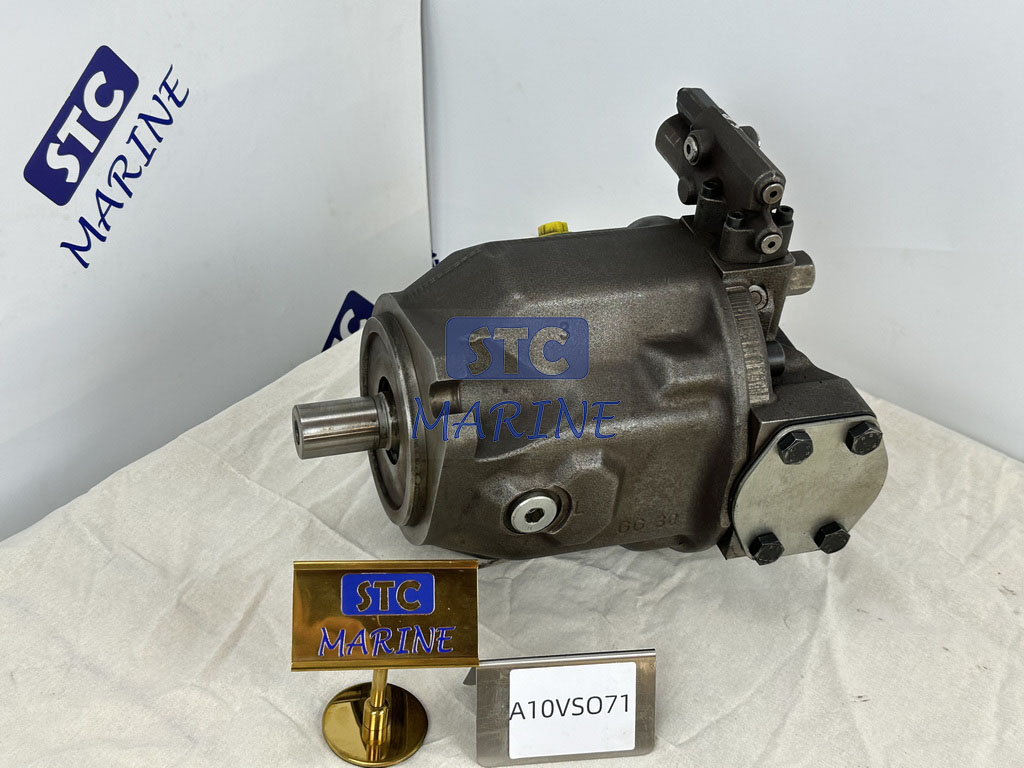


Although hydraulic motors and hydraulic pumps have many similar internal components, their functions are fundamentally opposite. A hydraulic pump converts mechanical energy into hydraulic energy by generating fluid flow, while a hydraulic motor converts hydraulic energy back into mechanical rotational power.
According to the authoritative textbooks Fluid Power with Applications by Anthony Esposito and Bosch Rexroth’s Hydraulic Training Manual, pumps are energy-producing devices within a hydraulic circuit, whereas motors are energy-consuming actuators that convert pressurised fluid into torque and motion.
Introduction to hydraulic motors and hydraulic pumps
Hydraulic systems form the backbone of modern industrial machinery. They enable the transmission of enormous forces through relatively compact components in a variety of machinery, including offshore cranes, marine winches, construction excavators, mining equipment, agricultural machinery, and manufacturing automation.
Two devices in particular often confuse engineers, purchasing managers, maintenance technicians, and equipment owners:
- Hydraulic pump
- Hydraulic motor
At first glance, these devices may appear nearly identical. In fact, many hydraulic motors and pumps share similar housing designs, gear mechanisms, vane arrangements, or piston assemblies. Some units can even be reversed under specific operating conditions.
However, despite these similarities, their purposes, operating principles, internal designs, efficiency characteristics, and application requirements differ significantly.
Understanding these differences is critical for:
- Equipment design
- Troubleshooting
- Energy efficiency optimisation
- Component selection
- Maintenance planning
- Cost reduction
This comprehensive guide explores hydraulic motors and pumps in depth, comparing their operational characteristics and explaining how to select the right component for industrial applications.
Understanding Hydraulic Power Systems
Before comparing hydraulic motors and pumps, it is important to understand how hydraulic energy is transmitted.
Hydraulic systems operate based on Pascal’s Law, which states that pressure applied to a confined fluid is transmitted equally in all directions.
A typical hydraulic power system includes the following components:
- A prime mover (an electric motor or a diesel engine);
- A hydraulic pump;
- A hydraulic reservoir;
- Valves;
- Hydraulic lines;
- A hydraulic motor or cylinder;
- A return circuit.
The process follows a simple energy transformation chain:
Mechanical energy → hydraulic pump → hydraulic energy → hydraulic motor → mechanical energy.
The pump creates fluid flow, while the motor converts that flow and pressure back into usable mechanical work.
This distinction forms the foundation of every hydraulic system.
What Is a Hydraulic Pump?
A hydraulic pump is a mechanical device that converts mechanical energy into hydraulic energy.
It receives rotational power from an electric motor, an internal combustion engine, a gearbox, or a power take-off system.
Its primary function is to transfer hydraulic fluid from the reservoir to the hydraulic circuit.
Contrary to common belief, however, hydraulic pumps do not directly create pressure.
Instead, they generate flow.
Pressure only develops when the flowing fluid encounters resistance within the system.
For instance, when a hydraulic cylinder lifts a heavy load, the increased resistance causes pressure to rise throughout the circuit.
Without resistance:
- Flow exists.
- Pressure remains minimal.
This concept is fundamental to hydraulic engineering.
Primary Functions of a Hydraulic Pump
A hydraulic pump performs several critical tasks:
Fluid transportation: the pump draws hydraulic fluid from the reservoir and delivers it to the system.
Energy conversion: it converts shaft rotation into fluid movement.
System pressurisation: indirectly creates system pressure when resistance occurs.
Power distribution: supplies hydraulic energy to actuators and control valves.
Common Types of Hydraulic Pumps
Gear pumps
Gear pumps are among the most widely used hydraulic pumps thanks to their simplicity and cost-effectiveness.
Characteristics include:
- Fixed displacement;
- High reliability;
- Low maintenance;
- Moderate pressure capability.
Applications:
- Agricultural machinery
- Marine equipment
- Material handling systems
Vane Pumps
Vane pumps use sliding vanes rotating inside an eccentric housing. Vane pumps
Vane pumps use sliding vanes that rotate inside an eccentric housing.
Advantages include:
- Smooth operation
- Low noise
- Improved efficiency
Applications:
- Industrial automation
- Injection moulding machines
Piston pumps
Piston pumps provide the highest efficiency and pressure capabilities.
They are commonly used in:
- Offshore equipment
- Construction machinery
- Heavy industrial systems
What Is a Hydraulic Motor?
A hydraulic motor is a rotary actuator that converts hydraulic energy into mechanical energy.
Unlike a pump, which receives mechanical power and produces fluid flow, a hydraulic motor receives pressurised fluid and generates rotational force.
The motor creates:
- Torque
- Speed
- Mechanical output power
Hydraulic motors are used whenever rotary motion is required under heavy loads.
Examples include:
- Winches
- Conveyor drives
- Crane slewing systems
- Ship deck machinery
- Drilling equipment
- Forestry machinery

Primary Functions of a Hydraulic Motor
- Generate torque
Hydraulic motors can create a high level of rotational force, even at low speeds.
They replace electric motors where extreme torque is required.
- Convert hydraulic power
Motors transform fluid pressure and flow into mechanical output.
- Operate under harsh conditions
Hydraulic motors can withstand environments that would damage conventional electric motors.
Core Difference Between Hydraulic Motors and Hydraulic Pumps
The most important distinction lies in the energy conversion direction.
| Characteristic | Hydraulic Pump | Hydraulic Motor |
| Primary Function | Generates fluid flow | Produces rotation |
| Energy Input | Mechanical Energy | Hydraulic Energy |
| Energy Output | Hydraulic Energy | Mechanical Energy |
| Role in System | Power Source | Actuator |
| Shaft Function | Driven by engine/motor | Drives equipment |
| Fluid Movement | Draws and pushes fluid | Receives and exhausts fluid |
| Direction of Energy Flow | Mechanical → Hydraulic | Hydraulic → Mechanical |
This energy-flow distinction explains nearly every design difference between the two devices.
Why Can’t a Hydraulic Pump Simply Replace a Hydraulic Motor?
A frequently asked question in industrial maintenance is:
‘Since pumps and motors look similar, can they be used interchangeably?’
The short answer is:
Generally, no.
While some gear and piston designs are theoretically reversible, hydraulic motors are specifically engineered to handle operating conditions that pumps are not optimised for.
Key differences include:
Load-bearing capability: Motors experience continuous external loading.
Pumps generally do not.
Seal design: motor shaft seals must withstand back pressure and dynamic loading.
Bearing construction: Motors often require larger bearings to absorb radial and axial loads.
Starting torque: Motors must generate torque from a standstill.
Pumps are designed primarily to generate flow.
Internal leakage management
Motors require specialised leakage control to maintain torque efficiency.
Consequently, using a pump as a motor can result in:
- Reduced efficiency
- Excessive wear
- Seal failure
- Bearing damage
- Shortened service life
Internal Design Differences
Although hydraulic pumps and motors may have similar architectures, engineers significantly modify their internal components.
Hydraulic pump design priorities
Pump designers focus on:
- High volumetric efficiency
- Stable fluid delivery
- Minimal suction losses
- Cavitation prevention
- Long operational life
Pump optimisation emphasises fluid movement.
Hydraulic motor design priorities
Motor designers focus on:
- High starting torque
- Load resistance
- Smooth low-speed operation
- Shock load resistance
- Bidirectional performance
Motor optimisation emphasises mechanical power generation.
Comparison of Performance Characteristics
| Parameter | Hydraulic Pump | Hydraulic Motor |
| Starting Torque | Not Applicable | Extremely Important |
| Volumetric Efficiency | Very High | High |
| Mechanical Efficiency | Moderate | High |
| Radial Load Capacity | Limited | High |
| Axial Load Capacity | Limited | High |
| Continuous Rotation Under Load | Not Primary Design Goal | Primary Design Goal |
| Shock Resistance | Moderate | High |
| Speed Stability | Critical | Important |
Hydraulic Motor vs Hydraulic Pump Efficiency
Efficiency evaluation typically includes:
- Volumetric Efficiency
- Measures internal leakage.
- Mechanical Efficiency
- Measures friction losses.
- Overall Efficiency
Calculated as:
Overall Efficiency = Volumetric Efficiency × Mechanical Efficiency
ηoverall=ηv×ηm
Modern piston pumps often achieve efficiencies exceeding 95%.
Premium hydraulic motors typically operate within:
85%–95% overall efficiency
depending on load conditions and operating speed.
Types of Hydraulic Motors
Hydraulic motors are available in a variety of configurations, each of which is optimised for particular speed, torque, efficiency, and durability requirements. It is crucial to select the correct motor type because performance characteristics vary significantly across designs.
Gear motors
Gear motors are among the simplest hydraulic motors available. They closely resemble gear pumps in construction, consisting of meshing gears enclosed within a housing.
Pressurised hydraulic fluid enters the motor, forcing the gears to rotate and generating output torque.
Advantages include:
- Compact structure
- Low acquisition cost
- Easy maintenance
- Good reliability
Limitations include:
- Lower efficiency compared with piston motors
- Increased internal leakage over time
- Limited high-pressure capability
Typical applications:
- Agricultural equipment
- Conveyor systems
- Marine auxiliary machinery
- Light industrial drives
Because of their affordability and durability, gear motors remain one of the most commonly installed hydraulic motors worldwide.
Vane motors
Vane motors utilise sliding vanes mounted within a rotor that rotates inside an eccentric cam ring.
As hydraulic fluid enters the motor, the pressure acts on the vanes to create rotational movement.
Advantages include:
- Smooth operation
- Low noise levels
- Good speed control
- Compact size
Limitations include:
- Sensitivity to fluid contamination
- Moderate pressure ratings
- Reduced durability under severe shock loading
Common applications include:
- Manufacturing equipment
- Packaging machinery
- Automated production lines
Where smooth and quiet operation is a priority, vane motors often outperform gear motors.
Axial Piston Motors
Axial piston motors are widely regarded as the highest-performance hydraulic motors available.
These motors utilise multiple pistons arranged parallel to the drive shaft. Pressurised fluid acts on the pistons to generate rotational force via a swash plate or bent-axis mechanism.
Advantages include:
- Exceptional efficiency
- High-pressure capability
- Excellent torque density
- Variable displacement options
- Superior controllability
Applications include:
- Offshore winches
- Heavy construction equipment
- Marine cranes
- Drilling systems
- Mining machinery
Many modern offshore and industrial systems rely on axial piston motors due to their ability to deliver maximum power while maintaining excellent efficiency.
Radial Piston Motors
Radial piston motors are specifically designed for extremely high torque applications.
Unlike axial piston designs, the pistons are positioned radially around the shaft.
Benefits include:
- Outstanding starting torque
- Exceptional low-speed performance
- Very high load-carrying capability
- Long service life
Applications include:
- Ship deck machinery
- Heavy-duty winches
- Steel mill equipment
- Large rotating structures
These motors are often selected when electric drives cannot provide sufficient torque at low rotational speeds.
Types of Hydraulic Pumps
Just as there are different types of hydraulic motors, there are also several configurations of hydraulic pumps.
Selecting the correct pump directly affects:
- System efficiency
- Operating costs
- Energy consumption
- Reliability
Fixed Displacement Pumps
Fixed displacement pumps move a constant volume of fluid per revolution.
Examples include:
- External gear pumps
- Internal gear pumps
- Certain vane pumps
Benefits:
- Simple design
- Low maintenance
- Cost-effective
Drawbacks:
- Reduced flexibility
- Potential energy waste under varying load conditions
Fixed displacement pumps are widely used in systems where operating requirements remain relatively stable.
Variable displacement pumps
Variable displacement pumps can adjust fluid output based on system demand.
Examples include:
- Axial piston pumps
- Bent-axis piston pumps
Benefits:
- Improved energy efficiency
- Reduced heat generation
- Better system control
- Lower operating costs
Drawbacks:
- Higher initial investment
- Greater system complexity
Modern industrial equipment increasingly utilises variable displacement technology to improve overall system performance and sustainability.
Hydraulic Pump vs Hydraulic Motor: Engineering Comparison
Many engineers evaluate pumps and motors based on performance metrics rather than basic definitions.
The following table summarizes the most important engineering distinctions.
| Feature | Hydraulic Pump | Hydraulic Motor |
| Purpose | Create hydraulic flow | Produce mechanical rotation |
| Pressure Creation | Indirect | Uses existing pressure |
| Torque Output | Minimal | Primary function |
| Shaft Loading | Light | Heavy |
| Bearing Size | Smaller | Larger |
| Bidirectional Operation | Limited | Common |
| Back Pressure Handling | Moderate | High |
| Starting Characteristics | Not critical | Critical |
| Shock Load Resistance | Moderate | High |
| Drive Function | Source of power | Consumer of power |
This comparison highlights why the two components should not be viewed as interchangeable despite their visual similarities.
Hydraulic Motors and Pumps in Marine Applications
Marine engineering is one of the most demanding environments for hydraulic equipment.
Saltwater exposure, continuous operation, vibration, heavy loads, and unpredictable weather conditions all require highly reliable hydraulic systems.
Hydraulic pumps and motors are commonly used in:
- Anchor handling systems
- Mooring winches
- Cargo cranes
- Steering systems
- Hatch cover operations
- Deck machinery
- Offshore lifting equipment
In these applications, system failures can result in:
- Operational downtime
- Safety hazards
- Environmental risks
- Significant financial losses
Therefore, marine operators prioritise robust hydraulic component selection and preventive maintenance programmes.
Example: Offshore Crane Operation
An offshore crane is a clear example of how pumps and motors work together.
Step 1: The prime mover supplies power.
An electric motor or diesel engine drives the hydraulic pump.
Step 2: The pump generates hydraulic flow.
The hydraulic pump converts mechanical energy into hydraulic energy.
Step 3: Pressure Builds
Pressure builds as loads are lifted and resistance increases, creating system pressure.
Step 4: The hydraulic motor receives fluid.
The motor converts pressurised fluid into rotational force.
Step 5: The winch drum rotates.
Mechanical torque generated by the motor drives the winch drum.
Step 6: The load is lifted
Hydraulic energy becomes useful mechanical work.
This process demonstrates how pumps and motors perform complementary yet opposite functions within a hydraulic system.
Key Selection Criteria for Hydraulic Pumps
Selecting the right hydraulic pump requires you to evaluate several factors.
- Required flow rate
The flow rate determines the actuator speed.
Typical units:
Litres per minute (L/min) or gallons per minute (GPM).
Higher flow generally results in faster system operation.
- Operating pressure
Pressure requirements depend on the load.
Applications involving heavy lifting require pumps capable of handling significantly higher pressures.
- Fluid compatibility
The pump must be compatible with:
- Mineral oils
- Synthetic fluids
- Biodegradable hydraulic fluids
Material compatibility affects service life and reliability.
- Environmental conditions
Factors include:
- Temperature
- Humidity
- Corrosion exposure
- Marine environments
Harsh environments often require specialised seals and protective coatings.
- Energy efficiency
Energy costs continue to rise globally.
High-efficiency pumps can reduce:
- Fuel consumption
- Electricity usage
- Carbon emissions
This factor has become increasingly important in industrial procurement decisions.
Key Selection Criteria for Hydraulic Motors
Motor selection requires additional considerations.
- Torque requirements
Torque is often the most important specification.
The required torque determines:
- Motor size
- Pressure rating
- Displacement
Insufficient torque can result in poor performance and premature component wear.
- Speed requirements
Motor displacement directly influences rotational speed.
High-speed applications require different motor characteristics than low-speed, high-torque systems.
- Load characteristics
Engineers must evaluate:
- Continuous loads
- Intermittent loads
- Shock loads
- Reversing loads
Each of these conditions affects motor selection.
- Duty cycle
Operating hours significantly influence component lifespan.
Applications operating 24 hours per day require more robust designs than intermittent systems.
The Role of STC Marine Engineering in Hydraulic Systems
In marine and offshore applications, equipment reliability is paramount. Companies such as STC Marine Engineering supply and support the hydraulic solutions used for deck machinery, winch systems, steering equipment, and offshore lifting applications. In challenging marine environments, hydraulic pumps and motors must be able to withstand continuous loading, exposure to corrosion, and strict operational requirements. Proper component matching, preventive maintenance, and high-quality replacement parts are critical in maximising service life and minimising vessel downtime.
When it comes to projects involving hydraulic winches, cranes, and marine handling systems, choosing the right balance between hydraulic pump capacity and hydraulic motor torque output is one of the most important engineering decisions that affects the overall performance of the equipment.
Frequently Asked Questions (FAQ)
- Can a hydraulic pump be used as a hydraulic motor?
Some gear and piston designs can technically operate in reverse, but most hydraulic pumps are not optimized for motor duty. Long-term use as a motor often results in reduced efficiency, bearing overload, and premature failure.
- Which is more expensive: a hydraulic motor or a hydraulic pump?
The answer depends on the type and size. High-performance piston motors are often more expensive than comparable pumps because they require larger bearings, stronger housings, and enhanced torque-handling capabilities.
- Do hydraulic motors create pressure?
No. Hydraulic motors consume hydraulic pressure and flow supplied by the pump. They convert that hydraulic energy into mechanical torque and rotational movement.
- What determines hydraulic motor speed?
Motor speed is primarily determined by fluid flow rate and motor displacement. Higher flow generally increases speed, while larger displacement typically reduces speed but increases torque.
- What is the most efficient hydraulic pump type?
Axial piston pumps generally provide the highest efficiency, often exceeding 90–95% under properly controlled operating conditions.
- What is the best hydraulic motor for high torque applications?
Radial piston motors are widely regarded as the best choice for extremely high torque and low-speed applications, particularly in marine, mining, and heavy industrial equipment.
Conclusion
Although hydraulic motors and pumps may appear similar externally and have comparable internal architectures, they have fundamentally different functions within a hydraulic system. A hydraulic pump converts mechanical energy into hydraulic energy by generating fluid flow, while a hydraulic motor converts hydraulic energy back into mechanical power through torque and rotational motion.
Engineers, maintenance personnel, procurement teams, and equipment owners need to understand these distinctions. Selecting the correct components directly influences system efficiency, reliability, operating costs, and equipment lifespan. When designing offshore winches, industrial conveyors, marine cranes, or heavy construction machinery, selecting the right hydraulic pump and motor is key to achieving optimal performance and long-term operational success.
As hydraulic technology continues to evolve towards greater efficiency, smarter monitoring, and reduced environmental impact, the relationship between pumps and motors will remain central to fluid power engineering. Organisations that fully understand how these components differ and how they work together will be better positioned to maximise productivity, reduce downtime, and achieve sustainable operational excellence.