

A crane’s hydraulic system converts mechanical power into hydraulic energy, generating the force required for lifting, telescoping, slewing, and stabilising heavy loads. According to Pascal’s Law, hydraulic fluid transmits pressure uniformly throughout a closed system, enabling compact hydraulic components to produce tremendous force with precise motion control. According to Anthony Esposito’s Fluid Power with Applications and Herbert E. Merritt’s Hydraulic Control Systems, modern hydraulic cranes combine high-pressure pumps, precision valves, hydraulic cylinders, and intelligent electronic controls to enable safe, efficient, and reliable lifting operations.
The Crane Hydraulic Controller acts as the system’s command centre. By regulating oil flow, pressure, actuator movement, and electronic feedback, it ensures smooth crane operation, minimises energy consumption, and enhances operational safety in construction, mining, logistics, marine, and industrial applications.
Introduction
Hydraulic technology has transformed the modern crane industry, enabling machines to lift hundreds of tonnes with remarkable precision and stability. Whether they are operating on a busy construction site, loading cargo at a seaport, assembling wind turbines, or maintaining offshore oil platforms, cranes depend on hydraulic power because it delivers high force within a compact, highly controllable system.
Unlike mechanical transmission systems, which rely on gears, chains, and complex linkages, hydraulic systems transmit energy through pressurised oil. This enables operators to move massive loads smoothly while maintaining precise control over lifting speed, boom extension, and rotation. As crane capacities continue to increase and automation becomes more sophisticated, hydraulic systems have evolved from simple pump-and-cylinder setups into sophisticated electro-hydraulic platforms managed by intelligent controllers.
One of the most frequently asked questions from engineers, equipment buyers, and maintenance professionals is:
How does a crane hydraulic system work?
The answer involves far more than simply pumping oil. Modern crane hydraulic systems combine pumps, reservoirs, valves, cylinders, hydraulic motors, sensors, electronic controllers, and safety devices to create a coordinated network that continuously adjusts hydraulic pressure and flow according to operating conditions. At the heart of this network is the crane hydraulic controller, which synchronises multiple hydraulic functions while ensuring safety, efficiency, and accurate load handling.
This article explains the working principles of crane hydraulic systems, explores each major component, compares different hydraulic architectures, discusses maintenance best practices, and examines future trends shaping intelligent hydraulic lifting equipment.
What Is a Crane Hydraulic System?
A hydraulic crane system is a fluid power transmission system that uses pressurised hydraulic oil to convert engine or electric motor power into mechanical movement. Rather than transmitting force through rigid mechanical components alone, the system relies on the incompressibility of hydraulic fluid to deliver large amounts of force through relatively small actuators.
This system is responsible for almost all the movements performed by a modern crane, including lifting and telescoping the boom, rotating the superstructure, deploying the outriggers, operating the auxiliary winches, and controlling the attachments. As hydraulic oil can operate safely at pressures exceeding 35 MPa (5,000 psi) in many applications, hydraulic cranes can achieve outstanding lifting performance without requiring excessively large mechanical drive systems.
The primary objectives of a crane hydraulic system include:
- Generating sufficient lifting force for heavy loads
- Providing smooth and precise motion control
- Protecting the crane against overload conditions
- Improving energy efficiency through optimised oil flow
- Ensuring safe operation under varying working conditions
- Supporting simultaneous multi-function movements
Compared with purely mechanical lifting systems, hydraulic technology offers superior flexibility, compactness, and controllability, making it the preferred solution for mobile cranes, truck-mounted cranes, crawler cranes, rough-terrain cranes, and marine cranes.
The Basic Working Principle of a Crane Hydraulic System
Every hydraulic crane operates according to one of the fundamental principles of fluid mechanics: Pascal’s Law. This law states that pressure applied to a confined fluid is transmitted equally in all directions. This simple principle enables hydraulic systems to multiply force efficiently while maintaining precise control over movement.
The operating process follows a continuous cycle:
The diesel engine or electric motor drives the hydraulic pump.
The pump then draws hydraulic oil from the reservoir.
The hydraulic oil is then pressurised and delivered through high-pressure hoses.
The Crane Hydraulic Controller then interprets the operator’s commands and sensor feedback.
Control valves then direct the pressurised oil towards specific hydraulic cylinders or motors.
Hydraulic cylinders convert this into linear motion, while hydraulic motors generate rotational movement.
Once its work is complete, the hydraulic oil returns to the reservoir, where it is filtered, cooled, and recirculated.
This closed-loop system enables cranes to perform complex lifting operations continuously, maintaining stable hydraulic pressure and consistent operating performance.
Major Components of a Crane Hydraulic System
Although crane sizes and applications vary significantly, nearly all hydraulic cranes contain the following core components.
| Component | Primary Function | Importance |
| Hydraulic Pump | Converts mechanical power into hydraulic flow | ★★★★★ |
| Hydraulic Reservoir | Stores, cools, and supplies hydraulic oil. | ★★★★★ |
| Hydraulic Cylinders | Generate linear lifting and extension movements. | ★★★★★ |
| Hydraulic Motors | Drive rotary functions such as slewing and winches. | ★★★★☆ |
| Directional Control Valves | Direct hydraulic oil to actuators | ★★★★★ |
| Pressure Relief Valves | Prevent excessive system pressure. | ★★★★★ |
| Hydraulic Filters | Remove contaminants from hydraulic oil. | ★★★★★ |
| Hydraulic Hoses & Pipes | Transport pressurized hydraulic fluid | ★★★★★ |
| Crane Hydraulic Controller | Coordinates hydraulic functions and safety logic | ★★★★★ |
Each component plays a specific role, but it is the integration of these parts that enables modern cranes to deliver reliable, high-capacity lifting performance under demanding operating conditions.
Hydraulic Pump: The Source of Hydraulic Power
The hydraulic pump is at the heart of the power generation process. Rather than creating pressure directly, its primary function is to generate a continuous flow of hydraulic oil. Pressure only develops when this flow encounters resistance within the hydraulic circuit, for example, when a lifting cylinder supports a heavy load.
Crane manufacturers select hydraulic pumps based on factors such as lifting capacity, duty cycle, efficiency requirements, and system complexity. The most common pump types are:
Gear pumps: economical, compact, and suitable for light-duty cranes.
Vane pumps, which offer smoother flow and lower operating noise.
Axial piston pumps deliver high efficiency and high-pressure performance for medium and large-sized cranes.
Variable displacement piston pumps automatically adjust output flow according to system demand, significantly reducing energy consumption.
Modern mobile cranes increasingly employ variable displacement axial piston pumps because they continuously match hydraulic output to the operator’s commands. When no movement is required, the pump’s displacement decreases automatically, minimising power loss and reducing fuel consumption.
This intelligent flow regulation improves efficiency, reduces heat generation, and extends the service life of hydraulic components.
Hydraulic Cylinders: Converting Pressure into Lifting Force
Hydraulic cylinders convert hydraulic energy into linear mechanical movement. Every lifting, lowering, telescoping, or stabilising action performed by a crane relies on one or more cylinders operating in coordination.
A typical hydraulic cylinder consists of:
- Cylinder barrel
- Piston
- Piston rod
- High-performance seals
- Guide bushings
- End caps
When pressurised hydraulic oil enters one side of the piston, the piston rod extends. Reversing the oil flow retracts the rod, allowing precise bidirectional movement.
Crane cylinders are engineered to withstand extremely demanding conditions, including:
- High cyclic loading
- Continuous vibration
- Heavy impact forces
- Outdoor environments
- Temperature fluctuations
Because lifting safety depends heavily on cylinder integrity, manufacturers use precision-machined alloy steel, corrosion-resistant rod coatings, and advanced sealing systems to maximise durability and minimise leakage.
Hydraulic Motors
While cylinders generate linear motion, hydraulic motors provide rotary movement.
Typical crane applications include:
- Slewing the upper structure
- Operating hoisting winches
- Driving auxiliary equipment
- Rotating attachments
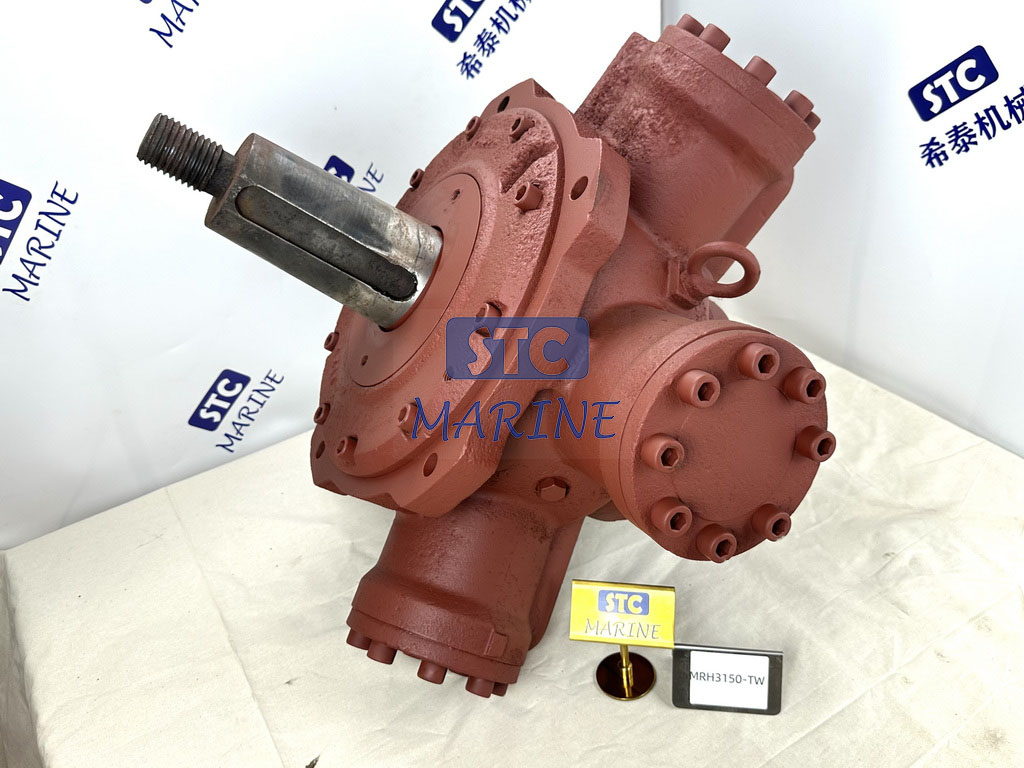
Hydraulic motors are particularly well-suited for cranes because they produce high torque at low speeds while maintaining smooth and controllable rotation.
Depending on application requirements, cranes may utilize:
- Gear motors
- Gerotor motors
- Radial piston motors
- Axial piston motors
Large crawler cranes and offshore cranes frequently employ piston motors due to their superior torque output and efficiency under heavy loads.
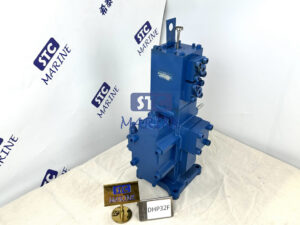
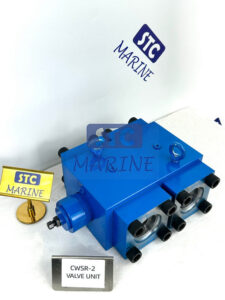
Hydraulic Control Valves
Control valves determine where hydraulic oil flows, how much pressure is generated, and how quickly actuators move. They are responsible for translating operator commands into controlled hydraulic actions.
The principal valve categories include:
- Directional Control Valves
These valves determine which actuator receives hydraulic oil and control the direction of movement. For example, they decide whether a boom is raised or lowered, or whether a telescopic section extends or retracts.
- Pressure Relief Valves
Pressure relief valves protect the hydraulic system by limiting maximum operating pressure. If pressure exceeds the preset value, excess oil returns safely to the reservoir, preventing damage to pumps, hoses, and cylinders.
- Flow Control Valves
Flow control valves regulate the volume of hydraulic oil supplied to actuators. By adjusting the flow rate, they control operating speed without affecting lifting capacity.
- Counterbalance Valves
These safety valves prevent suspended loads from descending uncontrollably if hydraulic pressure is suddenly lost. They are essential for protecting both operators and equipment.
Today’s advanced cranes often use electro-hydraulic proportional valves, which allow infinitely variable control rather than simple on/off operation. This technology produces smoother movement, greater positioning accuracy, and improved operator comfort.
Crane Hydraulic Controller: The Intelligent Core of the System
Among all hydraulic components, the Crane Hydraulic Controller has become the most critical element in modern lifting equipment.
Traditional hydraulic systems relied almost entirely on manual valve operation. While effective, they offered limited precision and required highly skilled operators to coordinate multiple simultaneous movements.
Modern cranes, however, incorporate electronic controllers that continuously monitor system conditions and optimize hydraulic performance in real time.
The Crane Hydraulic Controller typically receives information from numerous sensors, including:
- Hydraulic pressure sensors
- Boom angle sensors
- Boom length sensors
- Load moment indicators (LMI)
- Flow sensors
- Oil temperature sensors
- Engine speed sensors
- Position encoders
- Joystick inputs
Using this information, the controller performs thousands of calculations every second to regulate hydraulic flow and pressure throughout the machine.
Its primary responsibilities include:
- Coordinating simultaneous hydraulic functions
- Maintaining smooth actuator synchronization
- Preventing overload conditions
- Adjusting pump displacement
- Optimizing fuel efficiency
- Protecting hydraulic components from excessive pressure
- Performing fault diagnostics
- Recording operating data for maintenance analysis
As cranes become increasingly automated, the Crane Hydraulic Controller serves as the bridge between traditional hydraulic power and intelligent electronic control.
Open-Center vs. Closed-Center vs. Load-Sensing Systems
Different hydraulic architectures offer different performance characteristics.
The three most common systems used in crane applications are open-center, closed-center, and load-sensing systems.
| Hydraulic System | Advantages | Limitations | Typical Applications |
| Open-Center | Simple design, low manufacturing cost, easy maintenance | Lower efficiency, continuous oil circulation | Small truck cranes, light-duty equipment |
| Closed-Center | Higher efficiency, supports multiple simultaneous operations | More complex hydraulic circuit | Medium and large mobile cranes |
| Load-Sensing | Excellent energy efficiency, reduced heat generation, variable pump output | Higher initial cost | Modern truck cranes, crawler cranes, and all-terrain cranes |
Open-Center Systems
Open-center hydraulic systems continuously circulate oil back to the reservoir when control valves remain in the neutral position. Because the pump delivers a constant flow regardless of demand, energy losses are relatively high.
These systems remain popular for smaller cranes where simplicity and low purchase cost outweigh efficiency concerns.
Closed-Center Systems
Closed-center systems stop hydraulic flow when no actuator movement is required. This significantly reduces energy losses while improving responsiveness during simultaneous operations.
Many medium-capacity cranes adopt this architecture because it balances performance with reasonable system complexity.
Load-Sensing Systems
Load-sensing technology represents the current industry standard for high-performance hydraulic cranes.
Instead of supplying a constant flow, the hydraulic pump continuously adjusts its displacement according to actual system demand. The pump generates only the flow and pressure necessary to perform the required task.
This approach offers several advantages:
- Reduced fuel consumption
- Lower oil temperature
- Less component wear
- Improved multi-function operation
- Faster hydraulic response
- Extended service life
Load-sensing systems are particularly beneficial in cranes performing frequent and variable lifting cycles.
Hydraulic Oil: The Lifeblood of the System
Hydraulic oil performs far more functions than simply transmitting pressure.
A properly formulated hydraulic fluid simultaneously provides:
- Power transmission
- Lubrication
- Heat dissipation
- Corrosion protection
- Seal lubrication
- Contaminant suspension
Selecting the correct hydraulic oil requires consideration of several factors:
- Operating temperature
- Pump design
- Pressure rating
- Viscosity requirements
- Oxidation resistance
- Anti-wear performance
- Water separation capability
Using unsuitable hydraulic oil can lead to:
- Reduced lifting capacity
- Excessive wear
- Seal failure
- Increased operating temperature
- Pump cavitation
- Premature equipment failure
Regular oil analysis has become an essential maintenance practice for modern crane fleets because it provides early warning of contamination and component wear.
Improving Hydraulic System Efficiency
As fuel prices rise and environmental regulations become stricter, improving hydraulic efficiency has become a priority for crane manufacturers.
Several technologies contribute to greater efficiency:
| Technology | Primary Benefit |
| Variable displacement pumps | Reduced energy consumption |
| Load-sensing hydraulics | Automatic flow adjustment |
| Electro-hydraulic proportional control | Higher positioning accuracy |
| Intelligent Crane Hydraulic Controller | Optimized pressure and flow management |
| High-efficiency filtration | Reduced wear and longer oil life |
| Digital diagnostics | Predictive maintenance and reduced downtime |
Rather than maximizing hydraulic pressure at all times, modern systems aim to deliver only the energy required for the current lifting task. This philosophy reduces fuel usage, lowers emissions, and extends component life.
Hydraulic System Safety Features
Safety is one of the primary reasons hydraulic systems have become the preferred power transmission method for modern cranes. A lifting operation often involves moving loads weighing several tons—or even hundreds of tons—over workers, equipment, and valuable infrastructure. Consequently, today’s hydraulic systems incorporate multiple layers of mechanical, hydraulic, and electronic protection.
- Pressure Relief Valves
Pressure relief valves are the first line of defense against excessive hydraulic pressure. If system pressure exceeds the preset limit, the valve automatically diverts hydraulic oil back to the reservoir, preventing damage to pumps, cylinders, hoses, and fittings.
- Load Holding Valves
Load-holding valves (also called pilot-operated check valves) prevent a suspended load from descending unintentionally if a hydraulic hose ruptures or pressure is suddenly lost. They are especially important for telescopic booms and lifting cylinders.
- Counterbalance Valves
Counterbalance valves maintain controlled lowering speeds by balancing hydraulic pressure against the weight of the load. This prevents “runaway” boom movement and enhances operational stability.
- Load Moment Indicator (LMI)
Modern cranes continuously calculate lifting capacity using a Load Moment Indicator. The system monitors:
- Boom angle
- Boom length
- Load weight
- Working radius
- Outrigger status
If the calculated load moment approaches the crane’s rated capacity, the Crane Hydraulic Controller limits or blocks potentially dangerous movements before an overload occurs.
- Electronic Monitoring Systems
Advanced hydraulic controllers integrate with multiple electronic safety systems, including:
- Oil temperature monitoring
- Pressure sensors
- Boom position sensors
- Tilt sensors
- Engine diagnostics
- Emergency stop functions
These systems improve operator awareness while reducing the likelihood of mechanical failure caused by improper operation.
Common Hydraulic System Problems and Troubleshooting
Even a well-designed hydraulic system requires regular maintenance. Identifying common problems early helps minimize downtime and extends equipment life.
| Problem | Possible Causes | Recommended Solution |
| Slow lifting speed | Worn hydraulic pump, clogged filter, internal leakage | Inspect pump, replace filters, test system pressure |
| Boom drift | Damaged cylinder seals or a faulty holding valve | Replace seals and inspect valves |
| Hydraulic oil overheating | Low oil level, blocked cooler, excessive pump load | Check oil level, clean cooling system |
| Excessive hydraulic noise | Air entering the system or cavitation | Bleed air, inspect suction lines |
| Pressure fluctuations | Faulty pressure relief valve or controller settings | Calibrate or replace affected components |
| Oil leakage | Damaged hoses, loose fittings, worn seals | Replace damaged components and tighten connections |
Routine inspections help identify these issues before they develop into costly failures.
Preventive Maintenance Best Practices
Preventive maintenance remains the most effective strategy for maximizing hydraulic system reliability. Rather than waiting for failures to occur, maintenance teams should follow a scheduled inspection program based on operating hours and manufacturer recommendations.
Key maintenance tasks include:
- Check hydraulic oil level before each shift.
- Replace hydraulic filters at recommended intervals.
- Monitor oil cleanliness through laboratory analysis.
- Inspect hoses for wear, cracking, or leakage.
- Verify hydraulic pressure against design specifications.
- Lubricate moving joints and pivot points.
- Inspect cylinder rods for scratches or corrosion.
- Calibrate sensors connected to the Crane Hydraulic Controller.
- Test safety valves and overload protection systems.
- Update controller software when recommended by the manufacturer.
Proper maintenance not only improves safety but also reduces total operating costs by preventing unexpected downtime.
Emerging Trends in Crane Hydraulic Technology
The crane industry is undergoing rapid transformation as digital technologies become increasingly integrated with hydraulic systems.
- Electro-Hydraulic Integration
Traditional hydraulic controls are gradually being replaced by electronically controlled proportional systems. These systems offer greater precision, smoother operation, and easier integration with automation platforms.
- Intelligent Crane Hydraulic Controllers
Modern controllers incorporate advanced microprocessors capable of analyzing sensor data in real time. Functions now include adaptive pressure control, automatic fault diagnostics, predictive maintenance alerts, and optimized energy management.
- Internet of Things (IoT)
Connected cranes can transmit operational data to cloud-based monitoring platforms, allowing fleet managers to track equipment health, maintenance schedules, fuel consumption, and productivity remotely.
- Predictive Maintenance
Instead of relying solely on fixed maintenance intervals, predictive maintenance uses sensor data and analytics to detect early signs of wear. This approach reduces unexpected failures and improves equipment availability.
- Hybrid and Electric Cranes
As sustainability becomes increasingly important, manufacturers are developing hybrid and fully electric cranes. Efficient hydraulic systems remain essential, but they are now integrated with electric powertrains and energy recovery technologies to reduce emissions and operating costs.
How to Choose the Right Crane Hydraulic Controller?
Selecting the appropriate Crane Hydraulic Controller requires balancing performance, reliability, and compatibility with the overall hydraulic system.
When evaluating a controller, engineers should consider:
- Maximum operating pressure
- Hydraulic flow capacity
- Number of controlled functions
- Response time
- Communication protocols (CAN Bus, J1939, etc.)
- Diagnostic capabilities
- Environmental protection rating (IP level)
- Compatibility with load moment indicators and safety systems
- Software upgrade support
- Availability of technical service and spare parts
A high-quality controller can significantly improve crane performance while reducing fuel consumption and maintenance costs over the equipment’s service life.
Frequently Asked Questions (FAQ)
- How does a crane hydraulic system generate lifting force?
A hydraulic pump pressurizes hydraulic oil, which is directed by control valves into hydraulic cylinders. The pressure acting on the piston generates a linear force, allowing the crane to lift heavy loads efficiently according to Pascal’s Law.
- What is the function of a Crane Hydraulic Controller?
The Crane Hydraulic Controller regulates hydraulic flow, pressure, and actuator movement while monitoring sensor inputs. It coordinates lifting operations, improves energy efficiency, and protects the crane from overload conditions.
- Why do hydraulic cranes use oil instead of air?
Hydraulic oil is virtually incompressible, allowing it to transmit force much more efficiently than compressed air. This provides greater lifting capacity, smoother motion, and more precise control.
- What causes hydraulic systems to lose lifting power?
Common causes include worn hydraulic pumps, contaminated oil, leaking cylinders, damaged seals, clogged filters, faulty relief valves, or incorrect controller settings. Regular maintenance helps prevent these issues.
- What maintenance is most important for a crane hydraulic system?
Maintaining clean hydraulic oil, replacing filters on schedule, inspecting hoses and seals, checking system pressure, and calibrating the Crane Hydraulic Controller are among the most important preventive maintenance practices.
- What are the advantages of load-sensing hydraulic systems?
Load-sensing systems automatically adjust pump output to match actual demand, reducing fuel consumption, minimizing heat generation, improving response speed, and extending component life compared with conventional open-center systems.
Conclusion
A crane’s hydraulic system is a sophisticated power transmission solution that converts mechanical energy into precisely controlled hydraulic force for lifting, telescoping, rotating, and stabilising heavy loads. Modern cranes achieve exceptional lifting performance while maintaining high safety and operational efficiency standards by combining hydraulic pumps, cylinders, motors, valves, reservoirs, and advanced electronic controls.
Of all the system components, the crane hydraulic controller has become the cornerstone of modern crane technology. It continuously coordinates hydraulic pressure, oil flow, sensor feedback, and operator commands to deliver smooth, synchronised, energy-efficient operation. As the industry moves towards intelligent automation, predictive maintenance, and hybrid power systems, advanced hydraulic controllers will play an even greater role in improving productivity, reducing downtime, and ensuring safe lifting operations.
Understanding how a crane hydraulic system works is essential for manufacturers, equipment owners, and maintenance professionals, not only for selecting the right equipment, but also for maximising reliability, minimising lifecycle costs, and meeting the increasingly demanding performance expectations of today’s construction, logistics, mining, and industrial sectors.