
Hatch Cover Block Valve is designed to stop or isolate hydraulic oil flow in a hatch cover hydraulic system, whereas Hatch Cover Control Valve controls the direction, pressure, and action of hydraulic actuators when the hatch cover is open or closed.
In marine hydraulics principles and ship cargo handling system references, the blocks in a valve provide safety protection for the hydraulic system, while the control valves ensure operation precision, synchronization, and automation. Modern marine hydraulic manufacturers like STC Marine Engineering continue to improve the reliability, corrosion resistance, sealing performance, and hydraulic efficiency of their valves to meet increasingly stringent ship safety and cargo handling requirements.
Why Hydraulic Valve Systems Are Critical in Modern Hatch Cover Operations?
Modern commercial shipping relies heavily on highly reliable hydraulic systems for hatch covers to ensure the safe and efficient loading and unloading of cargo in all weather conditions. As the global maritime logistics sector continues to evolve towards larger vessels, higher cargo volumes, stricter safety regulations, and faster turnaround times, these systems have become increasingly sophisticated. Within these systems, hydraulic valves are essential control components that regulate oil flow, operational safety, pressure stability, motion sequencing, and emergency isolation.
Although hatch cover systems may appear mechanically simple from the outside, their internal hydraulic architecture involves a carefully engineered combination of hydraulic cylinders, pumps, pipelines, directional valves, pressure valves, block valves, control valves, safety locks, accumulators, and sealing systems.
Among these components, the hatch cover block valve and hatch cover control valve are frequently misunderstood because they both operate within the same hydraulic circuit. However, their functions, operational logic, and engineering objectives differ significantly.
The hatch cover block valve primarily functions as a hydraulic isolation device. It is designed to:
- Stop the movement of hydraulic oil
- Lock hydraulic pressure
- Isolate hydraulic sections
- Improve maintenance safety
- Prevent unintended actuator motion
- Secure hatch positions during emergencies
In contrast, the hatch cover control valve actively manages the operation of the hydraulic system. It controls the following:
- Actuator movement direction
- Opening speed
- Closing speed
- Pressure distribution
- Synchronisation
- Hydraulic sequencing
- Operational responsiveness
This distinction is extremely important in marine engineering because improper valve selection or misunderstanding can lead to the following:
- Hydraulic instability
- Cargo operation delays
- Unsafe hatch movement
- Hydraulic leakage
- Equipment damage
- Operational accidents
As vessels become larger and more automated, modern hatch cover hydraulic systems increasingly incorporate the following:
- Electrohydraulic control systems
- Proportional valves
- Loadholding circuits
- Pressure-compensated control valves
- Intelligent monitoring systems
- Emergency hydraulic isolation technologies
These developments have elevated the importance of both block valves and control valves within modern ship operations.
Marine environments also create unusually demanding operating conditions for hydraulic valve systems. Valves must continuously withstand saltwater exposure, temperature fluctuations, hydraulic pressure cycling, vibration, cargo impact forces, corrosion risks, and contaminated hydraulic fluids.
Due to these challenges, manufacturers such as STC Marine Engineering are focusing more and more on the following:
- Corrosion-resistant materials
- Precision-machined valve bodies
- Enhanced sealing technologies
- Pressure stability optimisation
- Longterm reliability
- Low-maintenance valve engineering
Understanding the difference between hatch cover block valves and hatch cover control valves, therefore requires an examination of the following:
- Hydraulic engineering fundamentals
- Marine cargo handling systems
- Valve operating principles
- Ship safety standards
- Hydraulic pressure management
- Maintenance procedures
- Operational sequencing
- Emergency protection systems
Although both valves operate within the same hydraulic network, they perform different engineering functions, which together ensure the safe, stable, and efficient operation of hatch covers aboard modern vessels.
What Is a Hatch Cover Block Valve?
A hatch cover block valve is a hydraulic isolation valve designed to stop or lock the flow of hydraulic oil within specific sections of a hatch cover hydraulic system.
Its primary functions are to:
- Isolate hydraulic circuits
- Maintain actuator position
- Prevent unintended movement
- Improve maintenance safety
- Provide emergency hydraulic locking
Block valves are generally installed near:
- Hydraulic cylinders
- Pressure lines
- Actuator ports
- Maintenance access points
Main functions of hatch cover block valves
Hydraulic isolation
The valve can fully stop oil movement within selected sections of the hydraulic system.
Load holding: block valves help to maintain cylinder position under pressure.
Emergency safety: They prevent accidental hatch movement during maintenance, system failure, pressure loss, and emergency shutdowns.
Maintenance protection: Technicians can safely isolate hydraulic sections before repair work.
What Is a Hatch Cover Control Valve?
A hatch cover control valve regulates the direction, pressure, and operational movement of the hydraulic flow within the hatch cover system.
Unlike block valves, control valves actively manage system operation during the opening and closing of hatches.
Main functions of hatch cover control valves
Directional control: they determine the flow paths of hydraulic oil.
Speed regulation: control valves manage opening and closing speeds and the synchronization rate.
Pressure management: the valve helps maintain stable hydraulic pressure.
Motion coordination: complex hatch systems often require synchronised actuator operation.
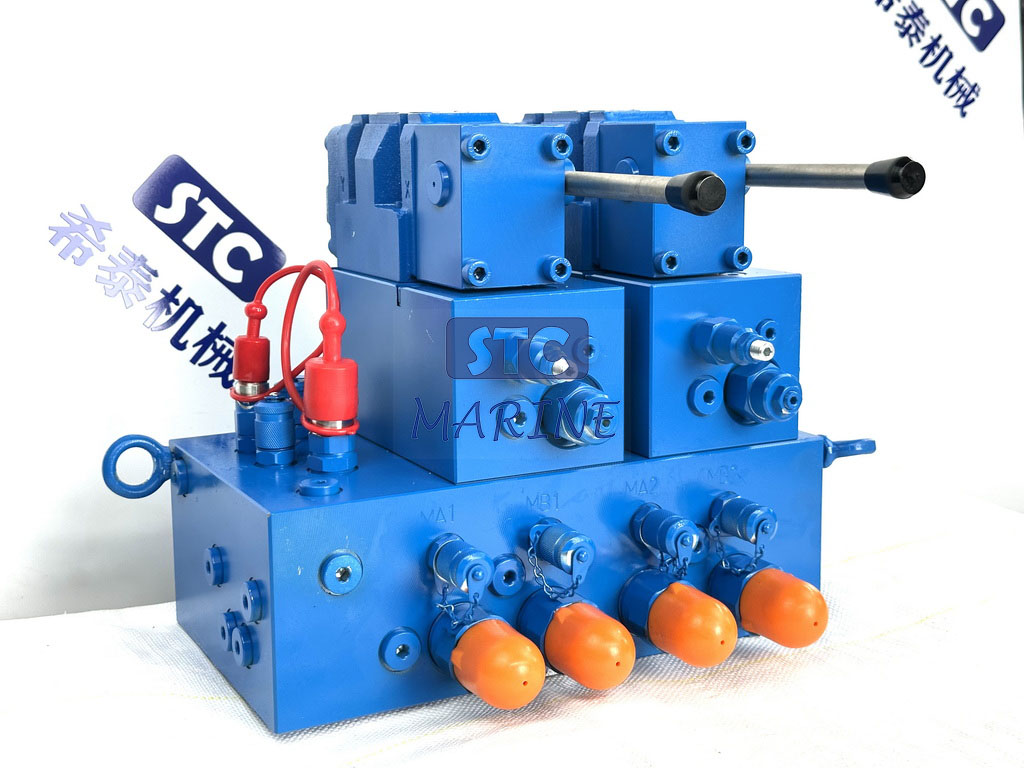
Main Differences Between Block Valves and Control Valves
Although both components belong to the hydraulic system, their engineering roles differ fundamentally.
| Feature | Hatch Cover Block Valve | Hatch Cover Control Valve |
| Primary Function | Isolates hydraulic flow | Regulates hydraulic operation |
| Main Purpose | Safety and locking | Motion control |
| Flow Condition | Usually fully open or closed | Variable flow regulation |
| Operational Role | Passive protection | Active control |
| Typical Installation | Near cylinders | Central hydraulic circuits |
| Pressure Management | Holds pressure | Controls pressure distribution |
| Maintenance Use | Isolation during servicing | Operational adjustment |
| Automation Level | Basic/manual or hydraulic | Often automated or electrohydraulic |
How Hatch Cover Hydraulic Systems Work?
In order to understand the differences between valves, it is important to understand the overall hydraulic system.
Basic hatch cover hydraulic components
Most systems include:
- Hydraulic power units
- Pumps
- Cylinders
- Valves
- Pipelines
- Filters
- Reservoirs
Hydraulic operating sequence
During hatch operation:
- Hydraulic pumps generate pressure.
- Control valves direct oil flow.
- Cylinders move hatch panels.
- Block valves maintain pressure stability.
Safety integration
Block valves provide emergency isolation if pressure suddenly drops, hoses fail, or control systems malfunction.
Why Are Block Valves Essential for Marine Safety?
Marine safety regulations place a strong emphasis on hydraulic locking systems.
- Preventing accidental hatch movement
Large hatch covers create enormous mechanical forces.
Unexpected movement may result in injury to personnel, damage to cargo, and destabilisation of operations.
- Hydraulic locking during maintenance
Maintenance crews require reliable hydraulic isolation.
- Pressure retention
Block valves help to retain hydraulic pressure during temporary shutdowns.
Why Are Control Valves Critical for Operational Precision?
Smooth and predictable hatch movement is essential for modern cargo operations.
- Motion synchronisation
Large hatch covers often use multiple cylinders simultaneously.
Control valves help to maintain equal movement speed, balanced pressure, and synchronised positioning.
- Smooth opening and closing
Uncontrolled motion may cause mechanical shock, structural stress, and seal damage.
- Automated cargo operations
Modern ships are increasingly integrating remote hydraulic control, automated sequencing, and electrohydraulic monitoring.
Types of Hatch Cover Block Valves
Several block valve designs exist within marine hydraulic systems.
| Valve Type | Main Application | Advantages |
| Ball Block Valve | Simple isolation | Fast shutoff |
| Needle Block Valve | Precision isolation | Better flow adjustment |
| Pilot-Operated Check Valve | Load holding | Prevents reverse movement |
| Manual Shutoff Valve | Maintenance safety | Simple operation |
Pilot-Operated Check Valves
These are widely used for:
- Cylinder locking
- Load holding
- Emergency protection
Types of Hatch Cover Control Valves
Modern systems use several control valve categories.
| Valve Type | Function | Typical Usage |
| Directional Control Valve | Flow routing | Hatch movement control |
| Proportional Valve | Variable flow regulation | Smooth motion control |
| Pressure Relief Valve | Overpressure protection | Hydraulic safety |
| Flow Control Valve | Speed adjustment | Motion stabilization |
ElectroHydraulic Control Valves
Modern vessels increasingly use electronically controlled systems for:
- Automation
- Remote monitoring
- Precise synchronization
Materials Used in Marine Hydraulic Valve Manufacturing
Marine valves operate under extremely harsh conditions.
Common Materials
| Material | Main Benefits | Marine Suitability |
| Stainless Steel | Corrosion resistance | Saltwater environments |
| Carbon Steel | High strength | Heavy-duty applications |
| Bronze Alloys | Anticorrosion properties | Marine fluid systems |
| Hardened Alloy Steel | Wear resistance | High-pressure systems |
Manufacturers such as STC Marine Engineering increasingly use advanced machining and sealing technologies to improve:
- Corrosion resistance
- Sealing performance
- Operational lifespan
- Hydraulic reliability
Common Problems in Hatch Cover Valve Systems
Hydraulic valve systems can experience several operational issues.
- Internal leakage
Seal wear may reduce pressure retention.
- Valve sticking
Contaminated hydraulic oil may interfere with valve movement.
- Pressure instability
Improper valve calibration may cause uneven motion, shock loading, and synchronization failure.
- Corrosion damage
Marine environments accelerate material degradation.
Maintenance Best Practices for Hatch Cover Valves
Regular maintenance can significantly improve the reliability of a system.
- Hydraulic oil inspection
Contaminated oil can damage valve components.
- Seal replacement
Worn seals should be replaced promptly.
- Corrosion monitoring
Saltwater exposure requires regular inspection.
- Pressure testing
Routine testing verifies pressure stability, flow control, and locking reliability.
Technological Trends in Marine Hydraulic Valve Engineering
Modern hydraulic systems are continuing to evolve rapidly.
- Smart hydraulic monitoring
Advanced systems now monitor the following:
- Pressure fluctuations
- Valve position
- Flow stability
- System diagnostics
- Electrohydraulic automation
Automation improves the following:
- Operational precision
- Safety
- Efficiency
- Improved sealing technology
Modern seals offer the following:
- A longer lifespan
- A lower leakage risk
- Better chemical resistance
- Corrosion-resistant coatings
Marine coatings improve valve durability in harsh conditions.
Common Mistakes When Selecting Marine Hydraulic Valves
- Using industrial valves instead of marinerated valves
Marine environments require specialised corrosion resistance.
- Ignoring pressure ratings
Incorrect pressure specifications may cause system failure.
- Poor valve compatibility
Improper valve selection may disrupt:
- Synchronisation
- Pressure balance
- Hydraulic efficiency
- Inadequate maintenance planning
Hydraulic reliability depends heavily on preventive maintenance.
FAQ About Hatch Cover Block Valves and Control Valves
- What is the main difference between a hatch cover block valve and a control valve?
A block valve isolates hydraulic flow for safety and locking, while a control valve regulates hydraulic movement and operational control.
- Why are block valves important in hatch cover systems?
They prevent unintended hatch movement and improve maintenance safety.
- What does a hatch cover control valve do?
It controls hydraulic oil direction, pressure, speed, and actuator movement.
- Can a hatch cover system operate without block valves?
Operating without proper isolation valves may create serious safety risks.
- What causes hydraulic valve failure in marine systems?
Common causes include contamination, corrosion, seal wear, and pressure overload.
- Why are electrohydraulic control valves becoming popular?
They improve automation, synchronization, operational precision, and remote monitoring capabilities.
Conclusion
Although the Hatch Cover Block Valve and the Hatch Cover Control Valve operate within the same marine hydraulic system, they have fundamentally different engineering purposes. Block valves primarily provide hydraulic isolation, load holding, emergency locking, and maintenance safety, stopping or securing the flow of hydraulic oil within specific sections of the system. In contrast, control valves actively regulate hydraulic movement, pressure distribution, actuator synchronisation and operational sequencing during hatch opening and closing procedures. Together, these valves form the foundation of the safe, stable, and efficient operation of hatch covers using hydraulics aboard modern commercial vessels.
As marine cargo systems evolve towards larger vessels, higher automation levels, stricter safety standards, and more advanced hydraulic technologies, the importance of reliable valve engineering continues to increase across the maritime industry. Manufacturers such as STC Marine Engineering are improving marine hydraulic valve performance by using enhanced materials, corrosion-resistant designs, advanced sealing systems, precision machining, and intelligent hydraulic control technologies. Understanding the functional differences between block and control valves helps ship operators, engineers, maintenance teams and vessel owners to optimise hydraulic safety, operational reliability, maintenance efficiency and longterm cargo handling performance in demanding marine environments.