


Abstract:
Hydraulic cylinders and hydraulic motors are both fundamental components in fluid power systems; the former converts hydraulic energy into mechanical motion. Despite both utilizing pressurized fluid, their principles of operation, motion, design, efficiency, and application are significantly different.
This article provides a comprehensive, industry-oriented comparison between hydraulic cylinders and hydraulic motors, covering working principles, structural differences, performance characteristics, efficiency considerations, control methods, and real-world industrial applications. The objective is to differentiate not only the differences but also the specific scenarios in which each is employed.
Introduction: Why the Difference Matters in Hydraulic System Design?
Today, modern machinery, equipment, mobile hydraulics, and manufacturing automation all require hydraulic power. However, the performance, reliability, and cost of the system are heavily dependent on the actuator’s selection.
Despite the frequent misconception, hydraulic cylinders and motors are not substitutes for one another. Understanding their dissimilarities can mitigate:
- Ineffective energy utilization
- Poor motion regulation
- Early component failure
- Increased costs of the system
Understanding the distinction is crucial to hydraulic engineers, designers, and buyers of equipment.
Basic Definitions
-
What is a hydraulic cylinder?
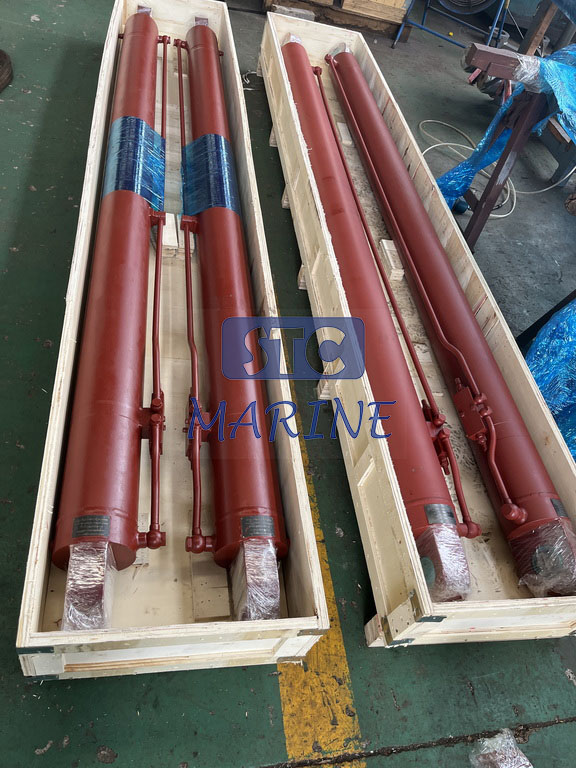
A hydraulic cylinder is a mechanical actuator that converts pressure from the hydraulic system into linear motion and force. It’s made up of a cylinder’s barrel, a piston, a rodent, a seal, and end caps.
Its primary function is to push, pull, lift, compact, or place objects in a direct path.

-
What is a hydraulic motor?
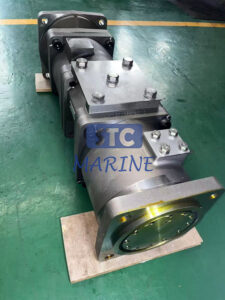
A hydraulic motor is a motion generator that converts hydraulic energy into constant rotational motion and force. It employs internal cycling components like gears, vanes, or pistons.
Its primary function is to propel machinery that rotates, such as conveyors, winches, wheels, mixers, or rotary instruments.
Core Functional Difference: Linear vs Rotary Motion
The most fundamental difference lies in output motion.
| Aspect | Hydraulic Cylinder | Hydraulic Motor |
| Output Motion | Linear (straight-line) | Rotary (continuous rotation) |
| Primary Output | Force | Torque |
| Stroke / Rotation | Finite stroke length | Unlimited rotation |
| Typical Control | Directional valves | Flow & pressure control |
This single distinction influences every aspect of design, control, and application.
Working Principles Explained in Detail
-
How does a hydraulic cylinder function?
A hydraulic cylinder is based on the law of Pascal, which states that pressure applied to a confined fluid produces a force.
Raulic fluid flows through one side of the piston.
The pressure on the surface of the piston is exerted.
The rodent’s piston is either extended or retracted.
Mechanical labor is conducted linearly.
The force output is determined by the following formula:
Force = Pressure × Piston Area
This direct connection is beneficial to hydraulic cylinders because of their high force capabilities.
-
How does a hydraulic motor function?
A hydraulic engine converts water flow and pressure into motion.
A pressurized fluid is admitted to the engine.
Fluid interacts with internal elements that are rotating.
Mechanical pressure is exerted
The shaft continues to rotate.
The output of force is dependent on the displacement and pressure:
- Torque is proportional to the pressure multiplied by the displacement of the motor.
- Meanwhile, speed is primarily determined by the flow rate.
Structural Design Differences
-
Hydraulic Cylinder
Designed to follow a linear path.
Main components:
- Cylinder’s barrel
- Piston and rodent
- End caps
- Seals and bearings
Typically simple, inexpensive design
Power is derived from the pressure differential between the areas of the piston.
Design priority:
High productivity, consistency, and resistance to external loads.
- Hydraulic Motor
Designed to produce circular motion.
compact, confined space
Translates water’s energy into a continuous flow of motion.
Design priority:
- Constant rotation
- Consistent torque
- Peed management
Internal Structure of a Hydraulic Motor
Hydraulic motors are available in multiple structural types that are optimized for different purposes.
Common hydraulic motor varieties:
- Geared motors – Easy to implement, budget-friendly, and efficient at a moderate level
- Vane engines – Constant operation, average pressure range
- Piston engines (axial or radial) – High efficiency, high pressure, and wide speed range.
Key Internal Components:
- Rotor or piston part
- The valve that distributes or regulates flow is called a distribution port or plate
- Drive shaft
- Seals and bearings
The internal design of the engine determines the output of torque, the range of speeds, the efficiency, and the durability.
Motion Control Characteristics
-
Control of Water Cylinders
Hydraulic cylinders are typically manipulated using:
- Directional control valves
- Controlling the flow
- Pressure relief valves
The positioning process is often error-prone, but it can also require additional devices that provide feedback, such as linear transducers.
-
Control of Waterwheels
Hydraulic motors are dependent on
Controlling the flow to regulate speed.
Control of pressure to limit the rotation.
Precision motion systems that are closed.
They are inherently more adept at moving at a variety of speeds.
Load Handling Capabilities
-
The behavior of loads in a Hydraulic Cylinder
Hydraulic cylinders are superior to:
- Static load support
- Extremely strong pulling
- Structural placement
They can carry out heavy duties without having to move continuously, often with little to no leakage.
-
The behavior of loads in a hydraulic motor
Hydraulic power plants are designed for:
- Frequent changes
- Constant rotation
- Constant demand for variable torques
However, the holding of loads often necessitates a system of braking or check valves.
Efficiency Considerations
The efficiency levels are markedly different.
-
The efficiency of Hydraulic Cylinders
Hydraulic cylinders are typically:
Adequate in transferring power to the rear wheels.
Less likely to be affected by lost revenue
Easy to switch to alternative energy
The majority of the losses occur as a result of the seal’s friction.
-
The efficiency of hydraulic motors
Hydraulic motors have a problem:
Volumetric damage ( internal loss of content )
Mechanical damage (wear and tear)
Variations in efficiency based on speed
High-quality motors are designed to minimize these expenses.
Speed and Motion Characteristics
-
Raulic Cylinders
Provide linear motion with controllable power.
Speed is influenced by the flow rate and the size of the cylinders.
Ideal for use in applications that require high force at specific stroke lengths.
-
Mechanical Motors with hydraulics
Create rotary motion, which is converted into force.
Speed is derived from the displacement per revolution and the flow rate.
Adept for constant rotation or variable speed use.
Key Insight: Cylinders have a superior ability to perform push-pull or lifting actions, while motors have a superior capacity for rotational motion.

Direction Reversal and Control Complexity
-
Raulic Cylinders
The flow direction is reversed by means of 4-way directional control valves.
Easy linear control, but placement may necessitate proportional or servo valves.
Often more difficult to integrate into precise lifting or pressing scenarios.
-
Mechanical Motors with hydraulics
Directional reversal is the process of changing the flow direction to the engine.
Speed and torque are often regulated by pressure-compensated flow control or variable displacement units.
The rotary motion control can have a more intricate pattern in applications that have multiple degrees of rotation.
Takeaway: Motors typically require more complex control systems to ensure proper operation and accurate torque distribution.
Application-Based Comparison
-
Common uses of hydraulic cylinders
Excavator’s arms and boom
Presses and stamp machines
Injection molding devices that hold the clamps
Lifting devices and a jack
These apps need a linear force that’s controlled.
-
Common Uses of Hydraulic Motors
Conveyor moves
Winches and hoists
Water-powered wheels
Combination machines and rotary devices
These apps require constant motion that circles.
Table: Hydraulic Cylinder vs Hydraulic Motor Comparison
| Feature | Hydraulic Cylinder | Hydraulic Motor |
| Motion Type | Linear | Rotary |
| Main Output | Force | Torque |
| Stroke / Rotation | Limited stroke | Continuous |
| Speed Control | Moderate | Excellent |
| Load Holding | Strong | Requires braking |
| Complexity | Lower | Higher |
| Typical Use | Lifting, pushing | Driving, rotating |
Installation and Maintenance Differences
-
Hydraulic Cylinders
Typically, more simple to install and orient in linear motion systems.
Maintenance involves the inspection of the rodent’s shell, as well as the maintenance of the fluid.
Rod misalignment or a bend in the rod can lead to an early failure of the seal.
-
Mechanical Motors with hydraulics
Demand that the shaft be properly aligned, the torque be mounted, and the coupling be considered.
Maintenance is concerned with the wear of the bearing, internal condensation, and the quality of the fluid.
Excessive or repetitive exposure to the elements can adversely affect the service life.
Practical Tip: Both components have benefited from filtration, pressure relief valves, and regular system audits, but motors have typically required more exact placement.
Cost and Lifecycle Considerations
Hydraulic cylinders are typically less expensive and have a simple design.
Hydraulic power often has a higher cost because of the precision of the machining and the variable displacement of the design.
Lifecycle expenses are based on the frequency of operation, the quality of fluid, and maintenance.
For extremely heavy-duty, consistent-duty rotary assignments, motors may have greater durability and efficiency, despite a higher cost at the initial time.
Common Misconceptions
- “Cylinders can substitute for motors in all applications” – False: Linear and rotary motion are functionally separate.
- “Hydraulic motors are more difficult to maintain than cylinders.” This is partially true; the complexity is dependent on the type of motor and the control system.
- “Flow rate alone is the sole determining factor of speed” – Both displacement and pressure affect the motion performance.
- “Hydraulic cylinders are capable of always dealing with high-speed applications.” > Over the speed limit can lead to cavitation or a seal failure.
Industry Standards and Design Guidelines
Designers should follow the recognized standards of hydraulic engineering to ensure safety, reliability, and performance:
- ISO 10100 series: hydraulic power systems and components for water.
- ISO 3320: Cylinders with hydraulics– The dimensions and tolerances of mounting.
- ISO 1219: Symbols and diagrams of hydraulics
Different manufacturers have specific guidelines for pressure ratings, speed limitations, and service intervals.
Following these rules will guarantee compatibility, safety, and the longest life of the components.
FAQ: Hydraulic Cylinder vs Hydraulic Motor
- The primary difference between a hydraulic motor and a hydraulic cylinder is that the latter is powered by water, while the former is powered by oil.
A hydraulic cylinder has the effect of producing linear motion and force, while a hydraulic motor has the effect of producing rotary motion and torque.
- Can a water pump be utilized as a reservoir?
No. The internal structures and motion of their outputs are fundamentally dissimilar.
- Which is more effective, a hydraulic motor or a hydraulic cylinder?
Cylinders are more effective at applying linear force, while motors are best suited for rotational applications.
- Do hydropulled motors have more trouble maintaining?
Yes, because of its higher internal complexity and susceptibility to contamination.
- How is it possible to differentiate between a hydraulic cylinder and a hydraulic motor?
Select based on the required type of motion (linear or rotary-based), the load’s characteristics, the speed of control, and the complexity of the system.
Conclusion
What is the distinction between a hydraulic motor and a hydraulic cylinder?
The distinction is not only based on the motion type, but also on the philosophy of design, the behavior of performance, the characteristics of efficiency, and the suitability of application.
A hydraulic cylinder is the most effective solution for linear pressure, lifting, and placement. It is simple to operate, has a wide range of applications, and provides a high force output.
A hydraulic motor, however, is superior in continuous motion with a rotary axis, speed control, and the delivery of torque, making it essential for drive systems.
Understanding these discrepancies allows engineers and decision makers to create hydraulic systems that are safer, more efficient, and more dependable—in short, they produce superior performance and lower cost of life cycle.